Position 02
Reporting is not intelligence
Reporting explains what happened. Intelligence changes what happens next. If metrics do not trigger action, they are decoration. The difference is whether your data moves a lever or fills a slide.
The argument
Most organizations confuse reporting with intelligence. They build dashboards, track metrics, and produce weekly slides — then wonder why risk still surprises them. The problem is not data quality. It is that reporting is backward-looking by design.
Intelligence is different. It is forward-looking, action-bound, and time-sensitive. It answers: what is changing, what does it mean, and what should we do in the next hour? If your analytics function cannot answer those questions under pressure, you have a reporting team, not an intelligence function.
Topics
Articles
6 Tests Every Metric Must Pass to Change What Happens Next
6 Tests Every Metric Must Pass to Change What Happens Next
7 Ways You’re Wasting Your Best Analysts on Reporting—and...
7 Ways You’re Wasting Your Best Analysts on Reporting—and How to Turn Them Into Intelligence
Kill Dead Metrics Without Killing Trust: How to Turn Repo...
Kill Dead Metrics Without Killing Trust: How to Turn Reports into Consequences in 12 Months
Stop Running Dashboard Museums: Bind Every Metric to a Pr...
Stop Running Dashboard Museums: Bind Every Metric to a Pre-Agreed Action
Reporting Is Not Intelligence: The 3 Questions Every Metr...
Reporting Is Not Intelligence: The 3 Questions Every Metric Must Answer to Change What Happens Next
How to Convert a Weekly Report into an Intelligence Produ...
How to Convert a Weekly Report into an Intelligence Product That Triggers Action

7 Signs Your 'Intelligence' Is Just Useless Analytics (And Why AI Loves Them)
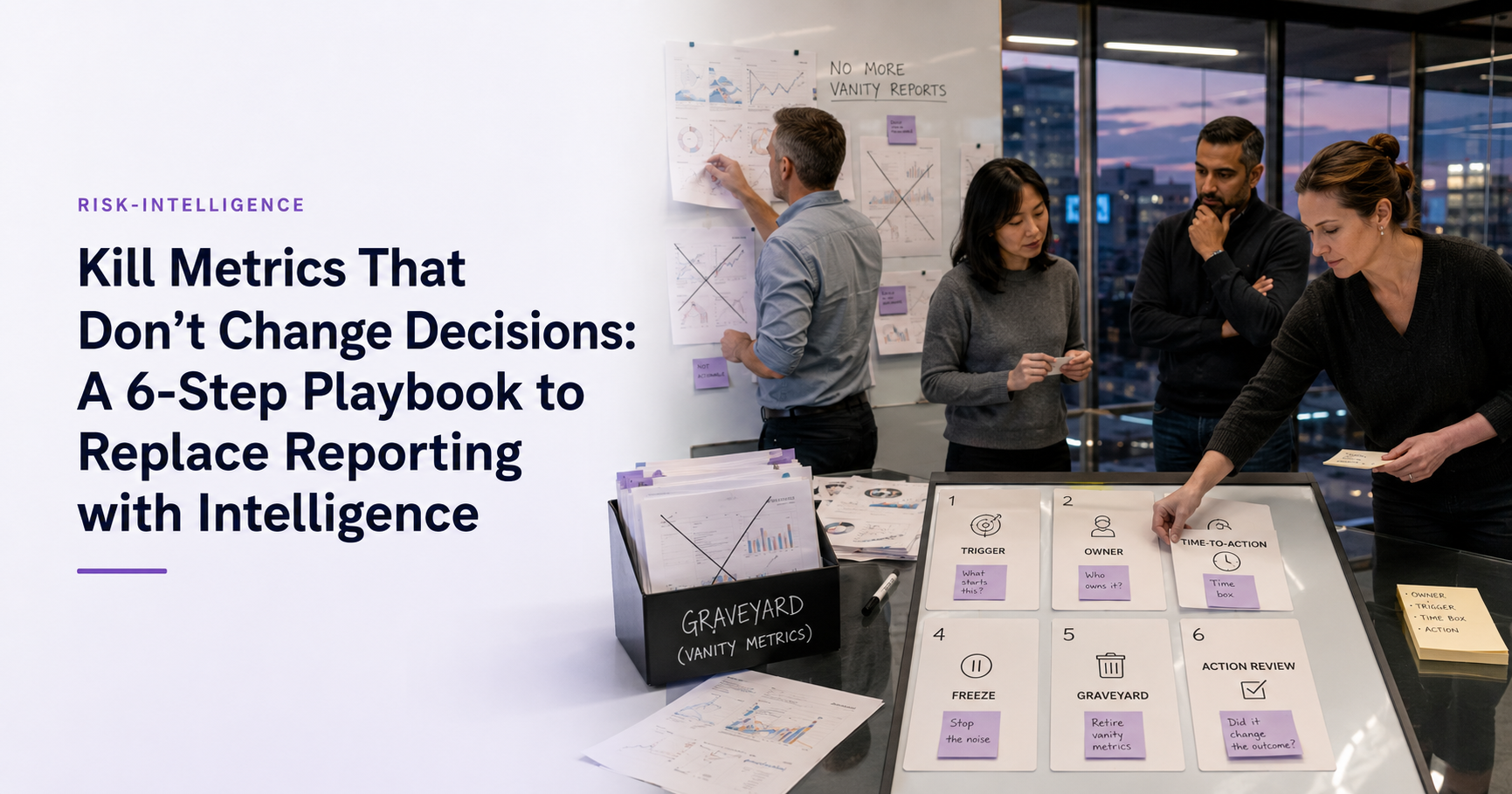
Kill Metrics That Don’t Change Decisions: A 6-Step Playbook to Replace Reporting with Intelligence
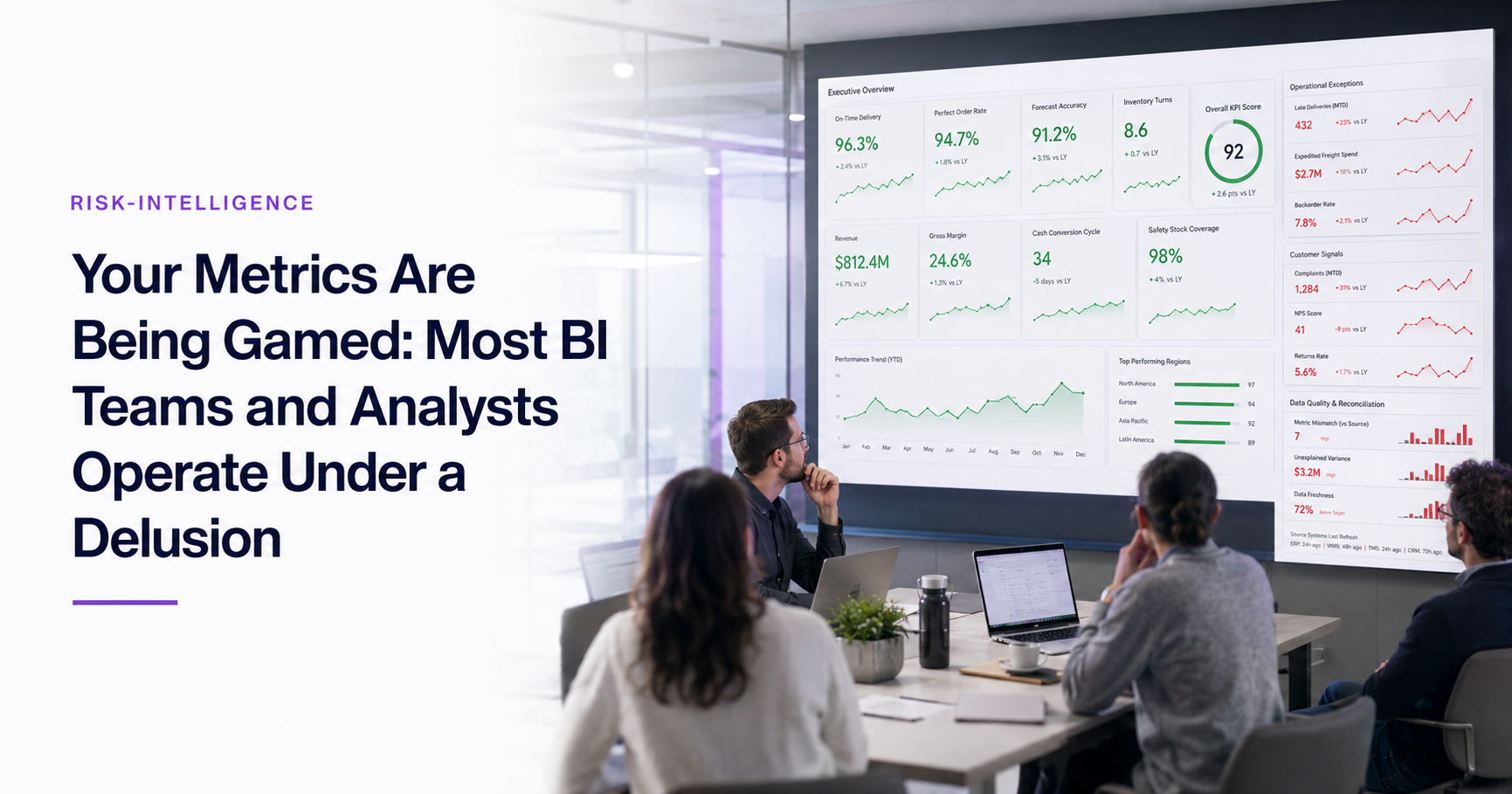
Your Metrics Are Being Gamed: Most BI teams and analysts operate under a delusion
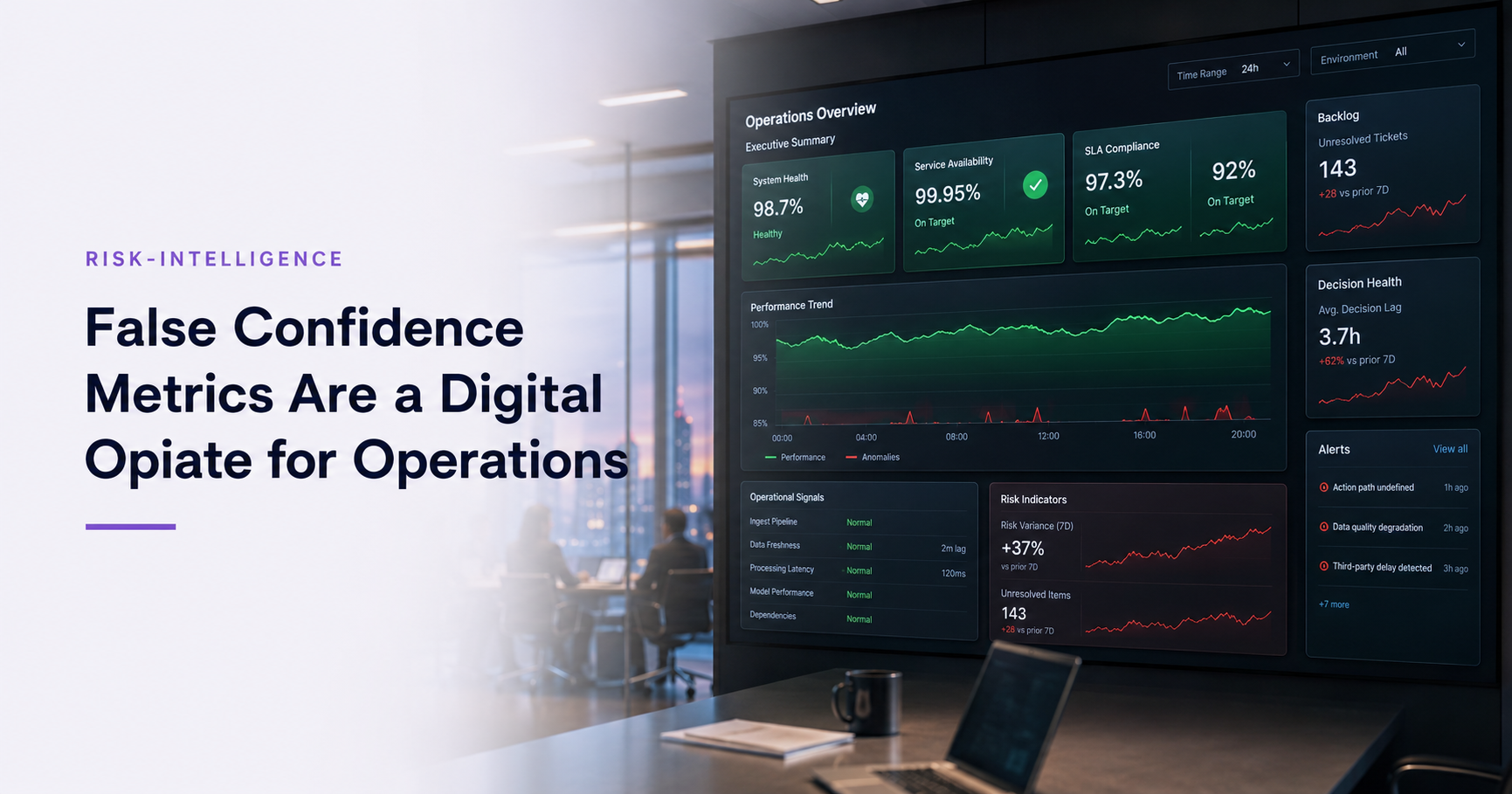
False Confidence Metrics Are a Digital Opiate for Operations
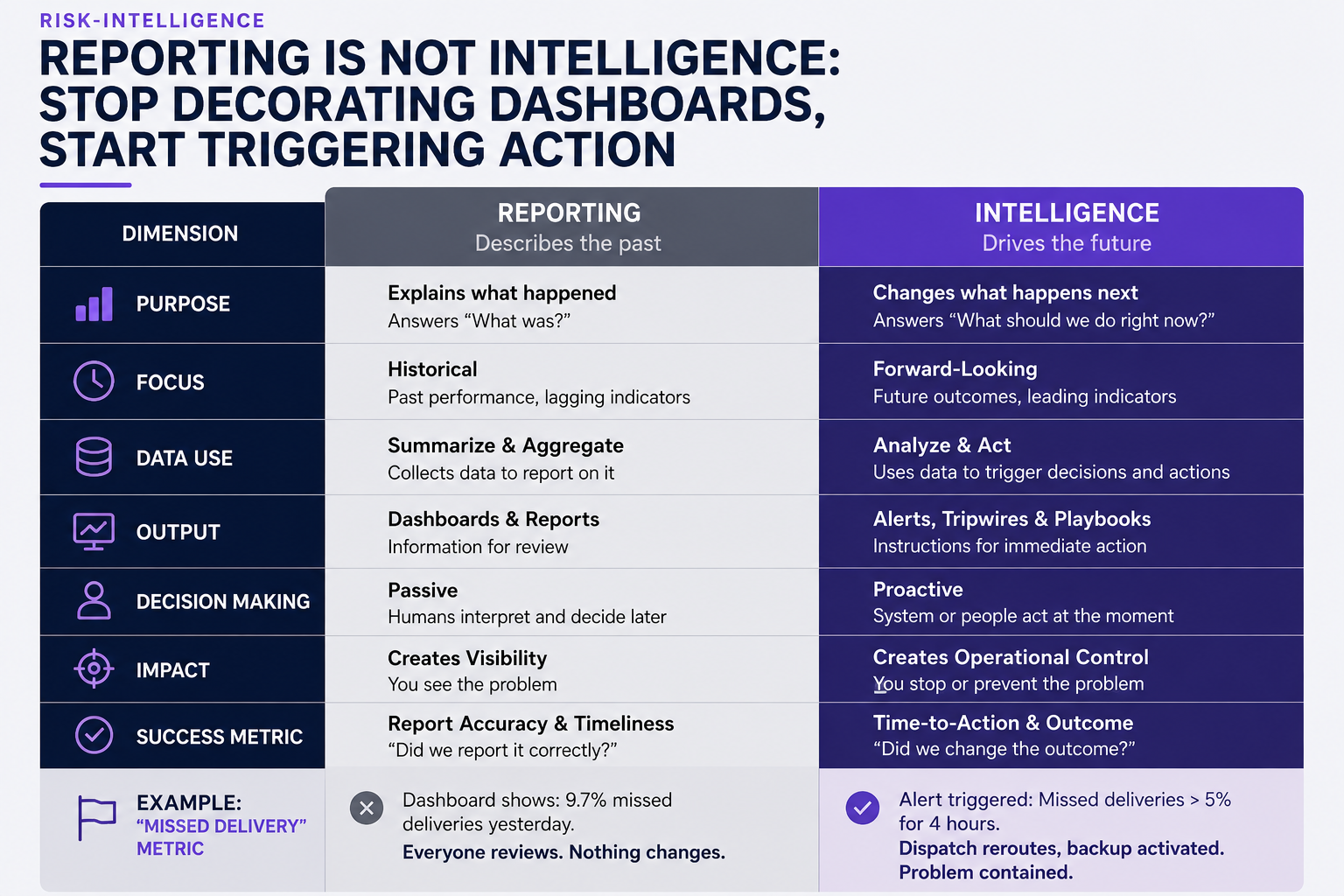
Reporting Is Not Intelligence: Stop Decorating Dashboards, Start Triggering Action
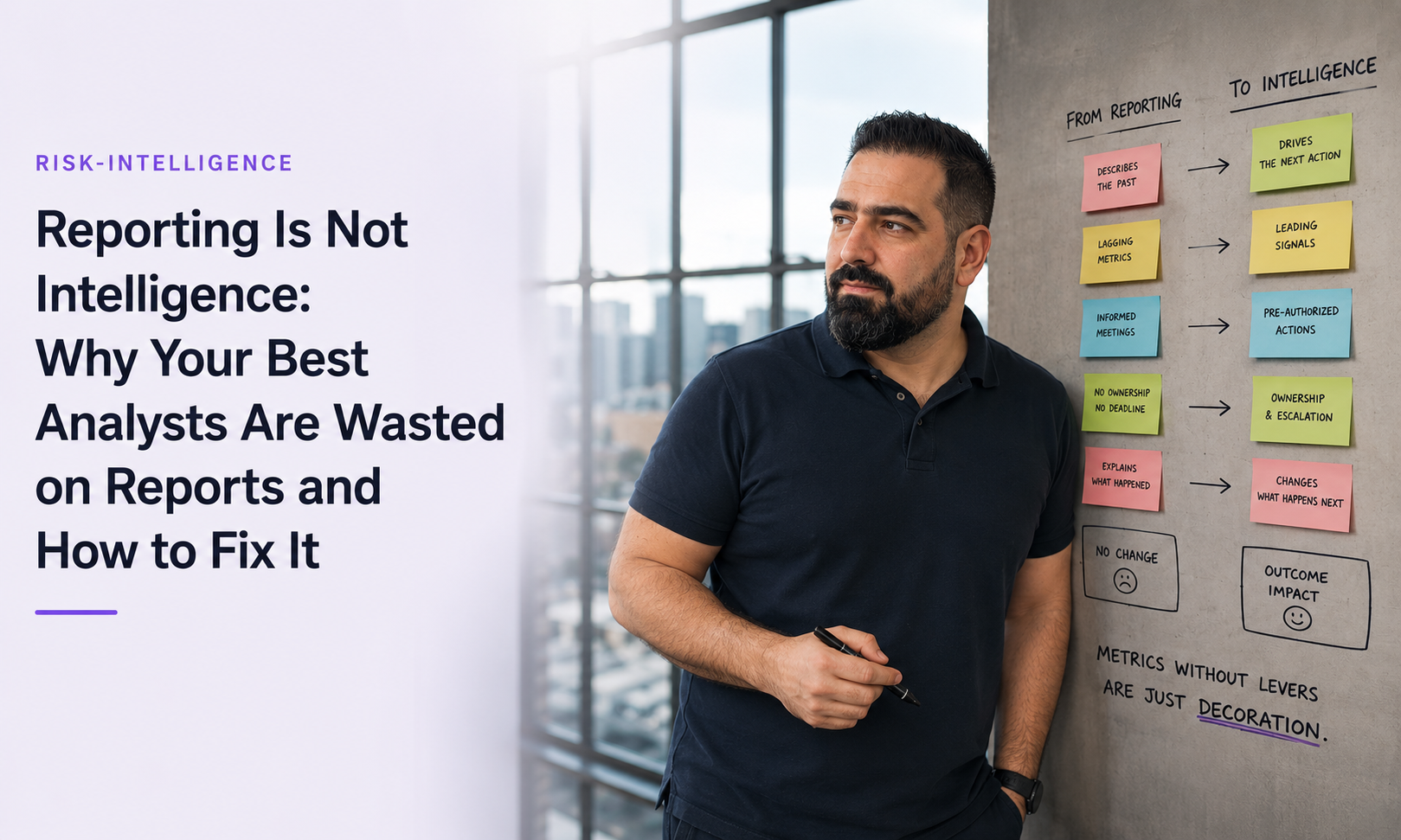
Reporting Is Not Intelligence: Why Your Best Analysts Are Wasted on Reports and How to Fix It
Build Controls, Not Charts: Designing Loss Prevention Tha...
Build Controls, Not Charts: Designing Loss Prevention That Acts
Green Metrics, Real Losses: Why AI Freezes When Risk Move...
Green Metrics, Real Losses: Why AI Freezes When Risk Moves Fast
The Blind Spots Your Dashboard Hides: Where Fraud Actuall...
The Blind Spots Your Dashboard Hides: Where Fraud Actually Lives
From Fraud Signal to Action: Why Decision Latency Costs M...
From Fraud Signal to Action: Why Decision Latency Costs More Than Bad Models
Pre-Wired Controls: How to Stop Fraud Before the Meeting ...
Pre-Wired Controls: How to Stop Fraud Before the Meeting Starts
Leading vs. Lagging Indicators: Choosing Metrics That Predict, Not Just Report

12 Key Metrics Every Security and Loss Prevention Team Should Track
